 WordPress · Agency · Digital Marketing
AS Medya
Modern, animated WordPress corporate website for a digital marketing, SEO, social media and brand consulting agency.
$ visit_site →Website redesign is the work of rebuilding an ageing site's design, technology and content structure while protecting the search rankings and visitor habits it has already earned. Mobile usability, speed, accessibility and structured data are part of every redesign. We start by inventorying the current site, then decide: sometimes a targeted refresh of the existing site is the better choice than a full rebuild.
A website should be redesigned when its problems are built into the structure and can no longer be fixed one at a time. Looking dated is not enough of a reason on its own; the real test is whether the site is still doing its job. If two or more of the signs below apply at once, a redesign is usually more economical than patching.
If the foundations are sound and the problem is on the surface, a refresh is enough; if the problem is the foundations, you need a redesign. A refresh keeps the existing code and works on design, copy or individual pages; a redesign rebuilds the site. The table shows the criteria we use to decide.
| Situation | Recommendation |
|---|---|
| Colours, images and copy feel dated, the stack is current | Refresh |
| A few pages convert poorly, the rest perform well | Refresh |
| The site is slow but the theme and code are sound | Refresh plus speed work |
| The site is not mobile-friendly and was built at a fixed width | Redesign |
| The platform cannot be updated or is out of support | Redesign |
| Brand and site structure change together, new languages are added | Redesign |
The decision is made in a free review. If a refresh will do, we say so in writing; we do not propose a bigger project than you need.
A redesign is more than a new look; speed, accessibility, structured data and SEO carry-over are all part of the job. The table lists what a standard redesign includes and what sits outside the scope.
| Task | Status |
|---|---|
| Content inventory and list of ranking URLs | Included |
| New sitemap and mobile-first design | Included |
| Moving existing content into the new structure | Included |
| 301 redirect map and post-launch checks | Included |
| Core Web Vitals targets (LCP, INP, CLS) | Included |
| Core accessibility: contrast, alt text, keyboard navigation | Included |
| Structured data (Organization, Service, FAQ) | Included |
| Rebuilding form, booking and analytics integrations | Included |
| Rewriting all copy from scratch and new language versions | Quoted separately |
| Professional photography and video | Not included |
| Hosting and domain subscription fees | Not included |
SEO survives a redesign when every URL that brought traffic or links to the old site has a matching home on the new one. Most post-redesign traffic drops are caused not by the design but by lost URLs and deleted content. That is why we inventory the current site before any design work starts.
Google's guide to site moves with URL changes covers these steps in detail and recommends keeping redirects for at least a year. If the current site has crawling or indexing problems, we resolve them through technical SEO rather than carrying them into the new build. If the server or domain also changes, the cutover follows our website and hosting migration plan on the same timeline.
A new design should never erase what the old site earned: inventory first, design second.
The process has four steps, and a typical corporate site redesign takes 4 to 8 weeks; page count and when the content is ready matter most. The new site is built on a separate staging environment while the live site keeps running. A backup is taken before launch and the switch happens at a low-traffic hour.
Existing pages, ranking URLs, integrations and conversion points are mapped; the new sitemap is signed off
The homepage and one inner page are designed mobile-first; once approved, the remaining pages follow the same language
The site is developed on staging, content and structured data are added, and speed and accessibility are measured
The 301 map goes live at the same moment, forms and integrations are tested in production, and the new sitemap is submitted to Search Console
WordPress usually suits a site whose content changes often and whose features are standard; custom software suits a site with its own business rules. Because we build both, we decide on neutral criteria:
For brochure-style business sites, our corporate website page explains the scope in detail. Moving away from closed platforms such as Wix or Squarespace is also a redesign project, because a site on those platforms cannot be exported as files to another server.
The standard we aim for in a redesign is visible in sites we have built. Scores were measured with Google PageSpeed Insights against Google's Core Web Vitals thresholds: LCP under 2.5 seconds, INP under 200 milliseconds, CLS under 0.1.
Redesign is part of our web design services; if you have no site yet, you will find our build options there.
Five variables set the price: page count, whether content is migrated or rewritten, the number of languages, integrations such as bookings or payments, and the number of URLs to redirect. The initial review is free; the quote is fixed after the review and does not go up later. The post-launch bug-fix guarantee and its duration are written into the quote.
Projects are led by Caner Zep Çelik, Founder & Technical Consultant at Zep Bilişim. Since 2020 he has worked across web design, software and search visibility, and has been involved in more than 100 projects. He carries out the inventory, the redirect map and the launch checks himself and does not subcontract the work.
If the site is mobile-friendly, the Core Web Vitals report is green and conversions meet expectations, you do not need a redesign; a refresh of a few pages will do. If the only problem is speed, speed optimisation is cheaper and faster; if it is only the server, a migration is.
Some of the sites we have built on different platforms. You can see them all on our references page.
WordPress · Agency · Digital Marketing
Modern, animated WordPress corporate website for a digital marketing, SEO, social media and brand consulting agency.
$ visit_site → Web Design · Multilingual · Esthetics
Premium trilingual (TR/EN/DE) corporate website for a cosmetic surgery clinic specializing in face, breast and body aesthetics.
$ visit_site →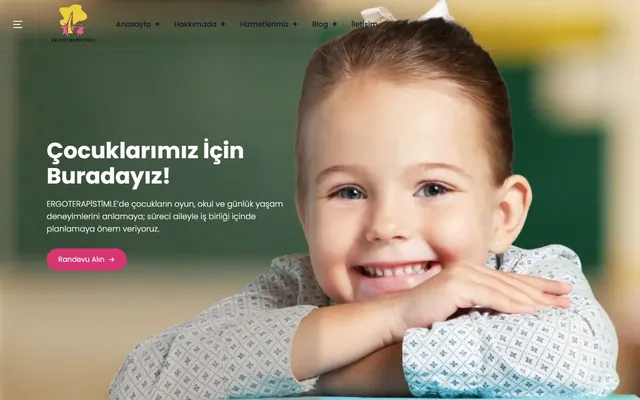 Web Design · Healthcare · Booking
Modern, appointment-focused corporate website design and development for a pediatric and occupational therapy center for children.
$ visit_site →A well-planned redesign should not cause a lasting drop. Every URL that brought traffic is 301-redirected to its new equivalent, ranking content is kept, and Search Console is monitored after launch. Some fluctuation in the first weeks is normal. Most lasting losses come from deleted content and URLs left without redirects, which is why the inventory comes before the design. We do not guarantee rankings.
A typical corporate site redesign takes 4 to 8 weeks. Inventory and scope take about a week, design 1 to 2 weeks, and build and content migration 2 to 4 weeks; launch happens in a single day. Page count, the number of languages and when your content is ready have the biggest effect on the timeline. Every stage has a date in the project plan.
A refresh keeps the existing platform and works on design, copy, images or individual pages. A redesign rebuilds the site with a new design and often a new stack. If the foundations are sound and the problem is on the surface, a refresh is enough; if the site is not mobile-friendly or cannot be updated, a redesign is more economical. We make the call in a free review.
Yes, existing pages and posts are moved into the new structure as part of the redesign. Content that brings traffic is kept or merged into a stronger page, and ranking copy is not removed without your approval. If you want copy rewritten from scratch or translated into new languages, that is quoted separately. Image sizes and formats are reworked for speed during the move.
If your team updates content often and standard features are enough, WordPress is usually more practical. If you need bookings, a member area or specific business rules, custom PHP or Node.js / Next.js runs with fewer compromises. WordPress needs regular updates; custom software needs a developer for changes. Because we build both, we recommend whichever fits your site rather than a default.
The cost depends on page count, whether content is migrated or rewritten, the number of languages, integrations such as bookings and payments, and how many URLs need redirecting. That is why we quote from a review rather than a fixed price list. The review is free, and the quote is fixed afterwards and does not go up later. Hosting, domains and photography are not included.
A fast, mobile-first business website your team can manage: scope, process and delivery guarantees.
View details → SEO OptimisationCrawling, indexing, redirect and structured data checks before and after a redesign.
View details → Website Maintenance & SupportPlanning server, domain and email moves without downtime or avoidable SEO loss.
View details →Written by: Caner Zep Çelik, Founder & Technical Consultant · Last updated: